- 28/09/2025 05:09:13
- Viewed: 234
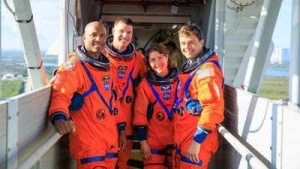
NASA is gearing up for the Artemis II mission, a ten-day crewed flight around the Moon slated for February 2026. This historic journey, the first crewed lunar mission in 50 years, will carry four astronauts beyond Earth's orbit to test spacecraft systems and gather crucial data for future lunar landings.
- 28/09/2025 05:09:13
- Viewed: 229
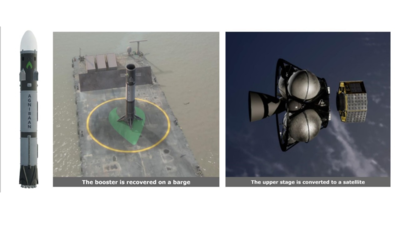
The Union Cabinet has approved a Rs 2,277.40 crore scheme to boost capacity building and human resource development in science and technology. Implemented by CSIR, the initiative aims to provide opportunities for young researchers across various STEMM fields. This scheme consolidates existing programs to further strengthen India's R&D ecosystem and global innovation ranking.
- 28/09/2025 04:09:12
- Viewed: 280
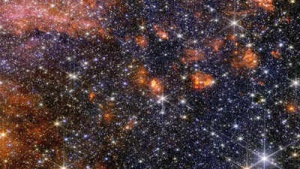
The James Webb Space Telescope has captured stunning new images of Sagittarius B2, a highly active star-forming region near the Milky Way's center. Utilizing NIRCam and MIRI, Webb's observations reveal hidden young stars within dense clouds and glowing cosmic dust, providing unprecedented insights into star birth in extreme environments. These findings aim to explain Sagittarius B2's exceptional star formation productivity.
- 28/09/2025 04:09:12
- Viewed: 250
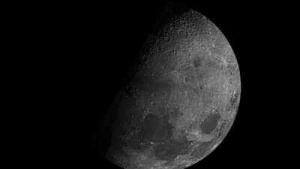
Scientists have discovered that the Moon is rusting due to oxygen particles originating from Earth. These particles travel through space and interact with iron-rich minerals on the lunar surface, forming haematite. This finding reveals a previously unrecognised chemical link between Earth and the Moon, demonstrating Earth's influence on its satellite.

- 28/09/2025 04:09:12
- Viewed: 235
A concerning report from the CDC reveals a significant surge in drug-resistant "nightmare bacteria" infections across the United States, escalating nearly 70% between 2019 and 2023. The rise is largely attributed to bacteria carrying the NDM gene, which resists many common antibiotics.
- 28/09/2025 04:09:12
- Viewed: 348
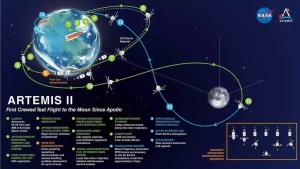
NASA's Artemis II mission, slated for launch on February 5, 2026, will send astronauts around the Moon in the Orion spacecraft, now named "Integrity." This ten-day journey aims to test Orion's systems in deep space, paving the way for future lunar landings and Mars missions. The mission emphasizes trust, respect, and global collaboration in space exploration.
- 28/09/2025 03:09:06
- Viewed: 223
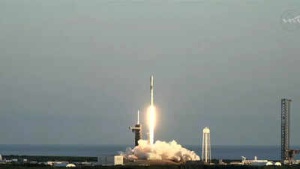
NASA's IMAP mission, launched on September 24, 2025, aboard SpaceX's Falcon 9, will study the Sun's magnetic influence. Exploring the heliosphere, it aims to map charged particles and solar wind, crucial for understanding space weather. This mission will analyze how the Sun affects satellites, astronaut safety, and conditions for life on Earth.

- 28/09/2025 03:09:06
- Viewed: 232
NASA and ISRO's joint NISAR mission, launched in July 2025, has released its first radar images, showcasing unprecedented detail of Earth's surface. The satellite's dual-band radar system captures forests, wetlands, farmland, and urban areas with remarkable clarity. This collaboration promises advancements in environmental monitoring, disaster preparedness, and a deeper understanding of our planet's dynamic changes.

- 28/09/2025 02:08:10
- Viewed: 211
Research indicates that subsea cables from offshore wind farms, while crucial for clean energy, emit electromagnetic fields affecting marine life. Female shore crabs are particularly vulnerable, exhibiting altered behaviour near cables, which disrupts their migrations and breeding. These disruptions could cascade through coastal food chains, highlighting the need for smarter planning and mitigation strategies in offshore energy development.

- 28/09/2025 02:08:10
- Viewed: 209
Preliminary results from the Suite Ride study on the International Space Station confirm continuous glucose monitors and insulin pens work reliably in space. This breakthrough, involving Indian astronaut Shubhanshu Shukla, paves the way for diabetic astronauts and revolutionizes remote diabetes care on Earth.

- 28/09/2025 02:08:10
- Viewed: 216
Stanford University and Elsevier's 2025 list of top 2% global scientists features 6,239 Indian researchers, showcasing India's growing influence in diverse scientific fields. This prestigious ranking, based on comprehensive bibliometric data, highlights significant contributions from institutions like IISc and IITs, underscoring India's rising research quality and international impact.

- 28/09/2025 02:08:10
- Viewed: 212
NASA's James Webb Space Telescope confirmed Earendel, the most distant star, shining just one billion years after the Big Bang. Gravitational lensing magnified this massive B-type star, offering unprecedented insights into the early universe's star and galaxy formation. Webb's observations also revealed a possible companion star and detailed structures within Earendel's host galaxy.



 Saif Ali Khan Confesses to Childhood Mischief: Stealing from His Father and the 'Struggles' of Palace Life
 Habib Faisal Reveals Neetu Kapoor's Role in Keeping Rishi Kapoor Grounded During 'Do Dooni Chaar'
 Harshit Rana's Grand Entrance: Star Bowler Arrives in Style for Gautam Gambhir's Team Dinner Ahead of Test Match
 TSMC Reclaims Top 10 Most Valuable Companies Spot Amid AI-Driven Stock Surge
 IRCTC's AI Chatbot AskDisha 2.0 Simplifies Train Ticket Booking, Refunds, and Information Access
 YouTube Star's Account Hijacked: Bitcoin Scam Unveiled and Security Measures to Protect Yourself
 Moto G54 Price Slashed in India: Budget-Friendly Smartphone Now More Affordable
 Oklahoma City Thunder: How a Team Forged a Bond with a City's Unimaginable Loss, 30 Years Later
 India's Asia Cup Victory Marred by Trophy Presentation Standoff with PCB Chief
 Razzak resigns as selector to contest BCB elections